
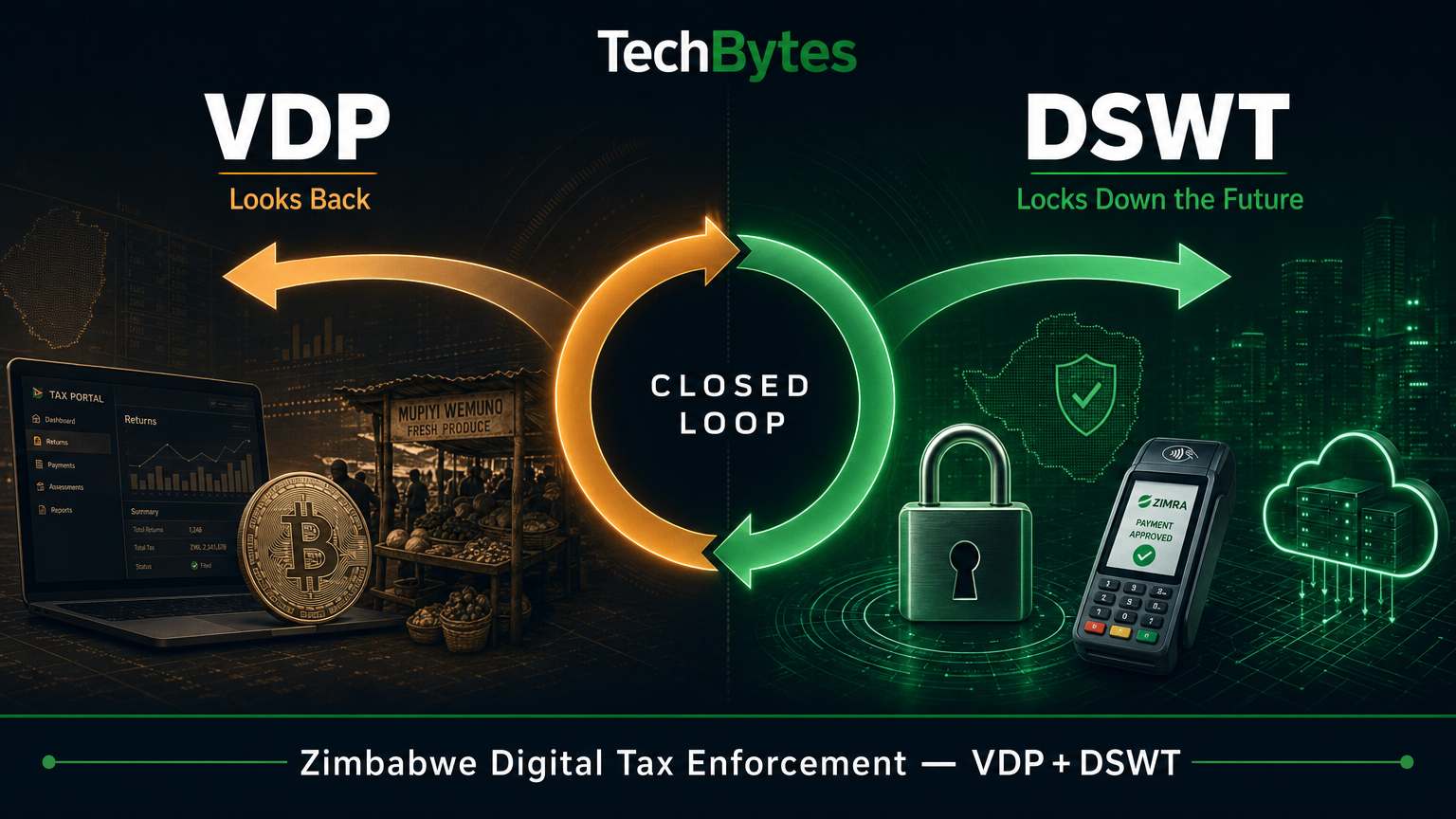
The Zimbabwe Revenue Authority has opened a Voluntary Disclosure Programme (VDP), inviting taxpayers to regularise undeclared income and outstanding tax obligations for the 2025 year of assessment. The incentive is straightforward: full disclosure leads to penalty waivers, with only interest remaining payable.
But this is not a broad, passive compliance exercise. It is surgical.
The Real Target: Modern Income Streams That Have Slipped Through the Cracks
ZIMRA’s targeting criteria reveal the true scope of this initiative. The VDP is aimed directly at income sources that have historically escaped the tax system:
•Individuals running unregistered businesses, especially in the informal sector
•People earning from online platforms and digital services
•Those receiving foreign income while resident in Zimbabwe
•Rental income earners not fully declaring
•Traders in gold, minerals, and other high-cash industries
•Operators in transport and taxi services
•Individuals using or transacting via crypto assets
•Businesses or individuals whose assets and lifestyle do not match declared income
•Non-resident entities earning from Zimbabwean users via e-commerce or digital services
This is not random coverage. This is a direct map of where ZIMRA believes revenue leakage has been happening—and notably, it is heavily weighted toward digital and informal economy participants.
The Two-Part Trap: VDP Looks Back, DSWT Locks Down the Future
Most analysis of Zimbabwe’s tax environment treats the Voluntary Disclosure Programme and the 15% Digital Services Withholding Tax (DSWT) as separate initiatives. They are not. Together, they form a closed loop:
VDP is retrospective. It targets historical income that escaped the system. If you earned from digital platforms, informal commerce, or cross-border transactions and did not declare, VDP is your entry point to regularise without facing penalties.
DSWT is prospective. It captures current and future digital transactions at source. If you continue earning now, ZIMRA already has visibility and a share.
The strategy is elegant: VDP clears the backlog, DSWT prevents future leakage. Once you understand this, the broader enforcement architecture becomes clear.
The Real Problem: It Is Not the Tax Rate, It Is the Cost Stack
On paper, DSWT is 15%. In practice, it is significantly higher.
When you factor in the full cost of digital transactions in Zimbabwe, the burden becomes prohibitive:
•Bank charges
•Card processing fees
•IMTT (Intermediated Money Transfer Tax) where applicable
•FX conversion margins
•Platform payment processor fees
Realistically, you are looking at 19% to 20% plus per transaction. This means every digital input into your business—cloud hosting, AI tools, SaaS subscriptions, online advertising—is structurally more expensive in Zimbabwe than in most peer markets.
The International Comparison: Rate vs. Execution
Zimbabwe’s 15% rate is not out of line globally. South Africa applies 15% VAT on electronic services. EU countries operate around 15% to 20% VAT. The UK is at 20%. Nigeria is at 7.5%. Kenya moved from a 1.5% digital tax to approximately 3% economic presence taxation.
So why does Zimbabwe feel heavier?
Other markets push compliance to suppliers and platforms. They have efficient payment systems and keep transaction costs relatively low. The burden is distributed.
Zimbabwe pushes collection to the payment layer. It adds banking friction on top and leaves the end user carrying the full burden. That is where it becomes prohibitive.
The difference is not the rate. It is the execution model.
The Unintended Consequence: Punitive Compliance Gaps
Technically, DSWT is not double taxation. But if you are not compliant, it behaves like it.
Consider this scenario:
1.You pay DSWT on a transaction
2.You fail to declare your full income
3.You later get assessed by ZIMRA
Now you have:
•Paid withholding upfront
•Still owe full tax exposure
That is how it becomes punitive. The withholding does not reduce your tax liability; it is just a prepayment. If your declared income does not match your actual earnings, you face the full assessment plus interest and potential penalties.
This creates a perverse incentive: if you are going to be assessed anyway, why comply at all?
The Deeper Play: ZIMRA Is Eliminating Visibility Gaps
Strip away the complexity, and both VDP and DSWT solve one fundamental problem: ZIMRA could not see large parts of the economy.
The authority is now fixing that by targeting:
•Informal businesses
•Cross-border earnings
•Crypto activity
•Platform-based revenue
This is not about increasing taxes randomly. It is about eliminating blind spots. ZIMRA is saying: we know where you are earning, and we are now making it visible.
The Uncomfortable Truth for Digital Operators
If you are building or running online businesses, earning from global platforms, trading or holding digital assets, or running side hustles digitally, you are now directly in scope. Not indirectly. Not eventually. Now.
The VDP window is a signal of enforcement maturity. ZIMRA has identified where people have been earning without declaring. DSWT ensures that going forward, those same income streams are no longer invisible.
The Real Problem: Economics, Not Enforcement
The problem is not that Zimbabwe is taxing digital activity. The problem is that the total cost of participating in that economy is becoming too high.
When compliance costs exceed a certain threshold, people do not comply better. They route around the system. They use informal channels, offshore structures, or simply stop participating in the formal economy altogether.
That is the real risk. Not evasion, but exit.
ZIMRA has built a sophisticated enforcement architecture. But enforcement without affordability is just extraction. And extraction, eventually, drives people out.