 then 'Add to home screen'
 then 'Add to home screen'

Think about the last time you bought a phone. You probably picked it up, turned it over, checked the screen, glanced at the box and started talking price. The whole thing took maybe half a minute.
That half-minute is what a counterfeit phone is made for. It doesn’t need to convince you for a year. It only needs to get through the moment at the counter.
So counterfeiters spend their effort on what you notice first. They copy the shape, the colours and the camera layout of whatever is popular, because that is cheap and it works. What they get wrong tends to be smaller and duller. A letter in the model name. Fuzzy print on the box. A charger that weighs next to nothing.
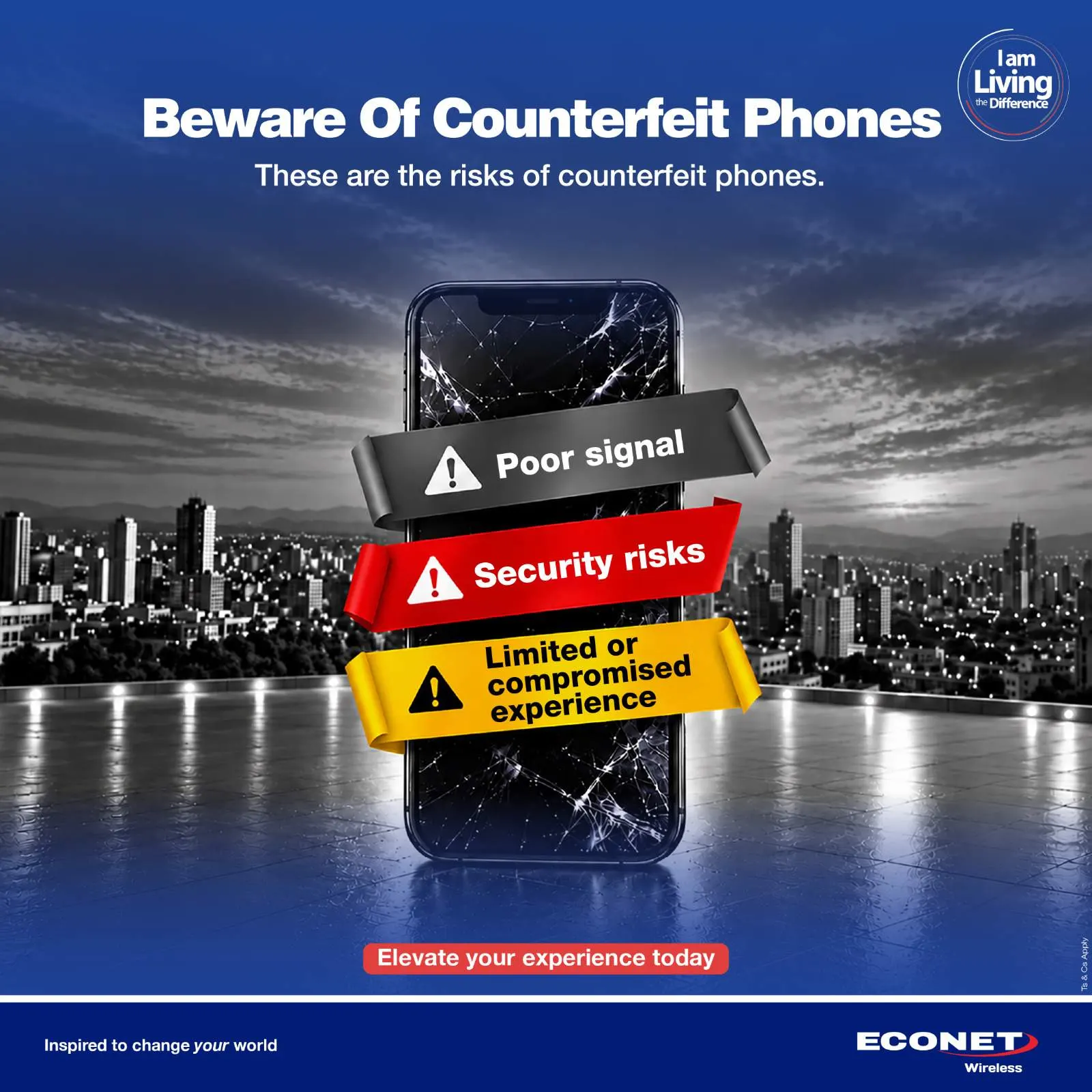
Econet’s Know Your Phone campaign sums it up in one line worth remembering: Know Your Phone. Check Before You Buy.
This is not a small problem
In 2017 the OECD went through global customs seizure records and found that nearly one in five mobile phones shipped internationally in 2013 was fake. A separate study by the EU’s intellectual property office and the ITU put the cost at 184 million lost smartphone sales in 2015, about 12.9% of the global market.
The figures are a decade old, but they show how big this trade is.
Counterfeit and grey are different things
A lot of people say “grey phone” when they mean fake. They are not the same.
A counterfeit phone is a device that imitates a genuine brand. A grey-market phone is generally a genuine device sold outside authorised distribution channels. The real manufacturer made it; it just didn’t come in through the official route. That can mean warranty headaches, but a grey-market phone is not automatically counterfeit.
What to look at
Start with the look, but don’t stop there. Copying the general design of a popular international brand is the easy part, so a phone that looks right hasn’t proved anything yet.
Read the name properly. Check the brand and model on the phone, in the settings and on the box. One wrong or missing letter is among the most common giveaways.
Compare the branding. Logos, fonts and labels should be identical on the handset, the packaging and any paperwork. Big manufacturers are fussy about this. Counterfeiters often aren’t.
Look hard at the box. Blurry printing, colours that don’t quite match and thin card are all worth a second look.
Check the specs. If the box promises 256GB of storage and 8GB of RAM, go to Settings, About phone and see what the phone itself says. Storage always shows a bit less than the box because the system uses some of it. The memory and model name should match.
Pick up the accessories. A charger or cable sold as original that feels flimsy and light deserves a question.
Look at the deal too
Be careful when the price is well below what that model normally sells for. That’s usually the hook. Ask for a receipt and warranty information. And insist on inspecting and testing the phone before any money changes hands. Make a call, join Wi-Fi, open the camera. A reasonable seller won’t mind.
None of this means a particular seller is dishonest. These are things to check in any sale, wherever you buy.
The *#06# check, and its limits
Every phone has an IMEI, a 15-digit identity number set out in the 3GPP TS 22.016 standard. Type *#06# and it appears on screen. Compare it with the number on the box or the label on the device.
It’s useful, but it isn’t the final word. An IMEI check is only one part of the verification process. A matching IMEI number does not by itself prove that a phone is genuine, and an IMEI mismatch should be treated as a warning sign requiring further investigation.
What happens in January 2027
From 1 January 2027, Zimbabwe’s biggest MNO, Econet, will begin restricting network access for new counterfeit phones. Existing counterfeit phones will not be restricted; their users will simply be advised that their device is counterfeit.
If you already have a phone, it carries on working. This is about the one you buy next.
Your checklist
Before you pay for any phone, new or second-hand:
|
If something doesn’t add up, ask about it. If you have concerns about a handset, an Econet Shop can help. Econet says more verification services are on the way, so keep an eye on its official announcements.
Know Your Phone. Check Before You Buy.
Before you buy a new or second-hand phone, give it more than half a minute. Inspect it, check the details, compare the specs and ask questions. Five minutes at the counter costs a lot less than finding out later.
#KnowYourPhone #SpotTheSigns #CheckBeforeYouBuy