A Sunday Email That Shook the World’s AI Chip Giant
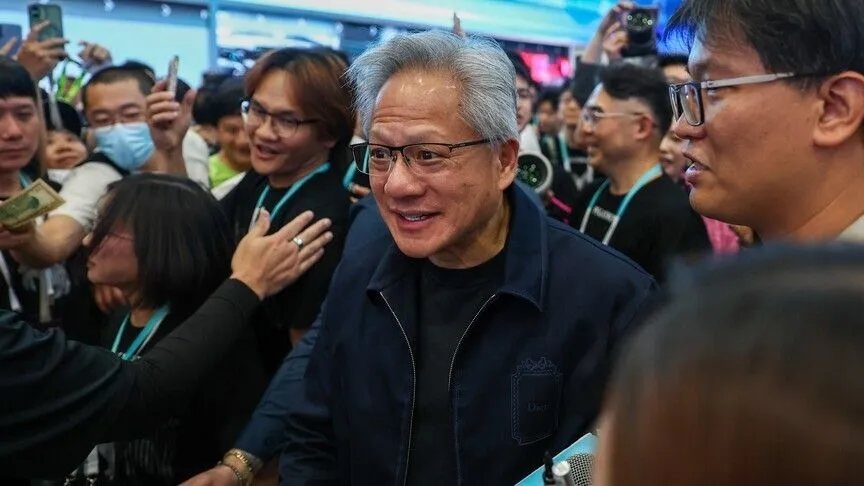
Jensen Huang, the leather-jacketed founder who turned Nvidia into the engine room of the AI boom, told his staff on Sunday, 8 November, that he had been unfaithful to his wife. Within hours, Nvidia’s board announced an independent investigation.
The confession did not come out of nowhere. In late October, The New York Times reported that US intelligence officials suspected a Chinese national named Huang Le, also known as Alice Huang, of passing information to Beijing, and that she had built a close relationship with the Nvidia chief. She is not related to him.
Nvidia’s CEO now faces the board probe, a request from US lawmakers for a closed-door briefing, and fresh questions about how the world’s most strategic chips reach China.
“There Is No Excuse for What I Did”
Huang’s message to employees was short and personal. “I was unfaithful to my wife. My actions hurt her and our children. There is no excuse for what I did. I am deeply sorry,” he wrote, according to ABC News and Yahoo Finance. He added that he had “fallen short” of his responsibility and would “work to earn back your confidence.”
The email did not name anyone. The board’s statement made the link to the spy reports plain. It said a committee of independent directors, assisted by outside counsel, will oversee an investigation “in light of recent reporting.”
The board also tried to calm investors. It said it has “no reason to believe that either national security or NVIDIA secrets were compromised” and that it “has confidence in Jensen and his leadership team.” A spokesperson said Huang will keep leading the company “without interruption.”
A U-turn on earlier denials
The admission sits awkwardly with what Nvidia said before. After the Times report on 29 October, Huang told Bloomberg his dealings with Alice Huang were “completely normal and not unusual,” and Nvidia described their contact as professional, Business Standard reports in a Bloomberg piece.
Alice Huang was a senior figure at Megaspeed, a Singapore-based company that rents out AI computing power and has bought Nvidia chips. Bloomberg reported in December 2025 that US authorities were probing whether Megaspeed diverted Nvidia chips to China. Nvidia said its own review found “no evidence of diversion,” and Megaspeed has denied wrongdoing. Neither Alice Huang nor Megaspeed responded to ABC’s requests for comment.
A Secret Memo, a Summons and the President’s Backing
This is no ordinary boardroom scandal, because Washington was reportedly warned months ago. According to The New York Times, as cited by TRT World and Bloomberg, Secretary of State Marco Rubio oversaw a top-secret memo this spring. It warned senior officials about Huang’s relationship with Alice Huang and was based on electronic surveillance of her. It reportedly circulated before President Trump’s state visit to China in May.
Congress is now moving. Republicans on the House Select Committee on China have asked Huang for a closed-door briefing on 18 November, saying the reports “raise significant national security concerns regarding the PRC’s access to sensitive U.S. technology,” ABC News reports. It is not yet clear whether he will attend.
The White House is standing by him. President Trump said Huang should stay on as CEO, according to Bloomberg. Beijing called the spying claims “baseless and purely slanderous smears against China.”
Why One Man’s Private Life Is Everyone’s Problem
Nvidia’s chips train and run almost every major AI system, from chatbots to image generators. That makes the company a strategic asset, and its CEO one of the most watched executives on earth.
Three things make this story bigger than a personal scandal:
- The China chip question. The US restricts sales of Nvidia’s most advanced AI chips to China, and Nvidia has lobbied to keep selling there. Any hint that a suspected intelligence asset had the CEO’s ear will fuel calls for tighter controls. Analyst Dan Ives told Yahoo Finance the affair is a “black eye” that “will also increase major scrutiny regarding selling chips to China.”
- Timing. The news lands days after a sharp sell-off in AI stocks on 5 November, when the Nasdaq fell about 5.5% and Nvidia dropped about 9%, TechStartups reports. Nvidia reports quarterly earnings on 17 November, one day before the requested briefing in Congress.
- Key-person risk. Huang co-founded Nvidia in 1993 and has run it ever since. Investors have long treated him as inseparable from the company. A board investigation, however it ends, forces the question of what Nvidia looks like without him.
Why This Reaches Africa’s AI Plans
Africa’s AI ambitions run on Nvidia hardware, so anything that tightens Washington’s grip on these chips reaches us too.
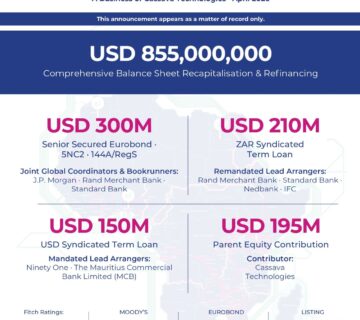
Cassava Technologies, founded by Zimbabwean entrepreneur Strive Masiyiwa, is building Africa’s first Nvidia-powered “AI factory” in a deal worth up to $720 million, with 3,000 GPUs in South Africa and plans for 12,000 across the continent, TechCentral reported. We covered the plan when it was announced: Cassava to build an AI factory in Africa. In August, a Centurion data centre announced 400 of Nvidia’s top B300 chips, and its backers noted that “these GPUs are heavily export controlled by the US and Taiwanese governments” (TechCentral).
The Megaspeed case shows how this works in practice. A third-country company buys chips, and Washington suspects some end up in China. Every new scandal of this kind adds pressure for stricter licensing, tighter end-use checks and caps on how many chips go to which countries. African buyers sit in that queue.
For countries like Zimbabwe, which has launched its 2026 to 2030 national AI strategy and promised AI-ready data centres, access to these chips is not abstract. It decides whether local AI infrastructure gets built at a sensible price, or at all. For more on the bigger picture, read How Zimbabwe Can Embrace AI as a Country.
Three Dates to Watch
- 17 November: Nvidia earnings. Expect analysts to ask about the investigation, China sales and leadership continuity. Markets were already nervous after the 5 November sell-off.
- 18 November: the requested congressional briefing. Whether Huang attends, and what lawmakers say afterwards, will shape the political fallout.
- The board’s findings. No timeline has been given. The key question is whether investigators find that any sensitive information reached Alice Huang or Beijing. The board says it has no reason to believe so.
TechBytes will keep following this story.