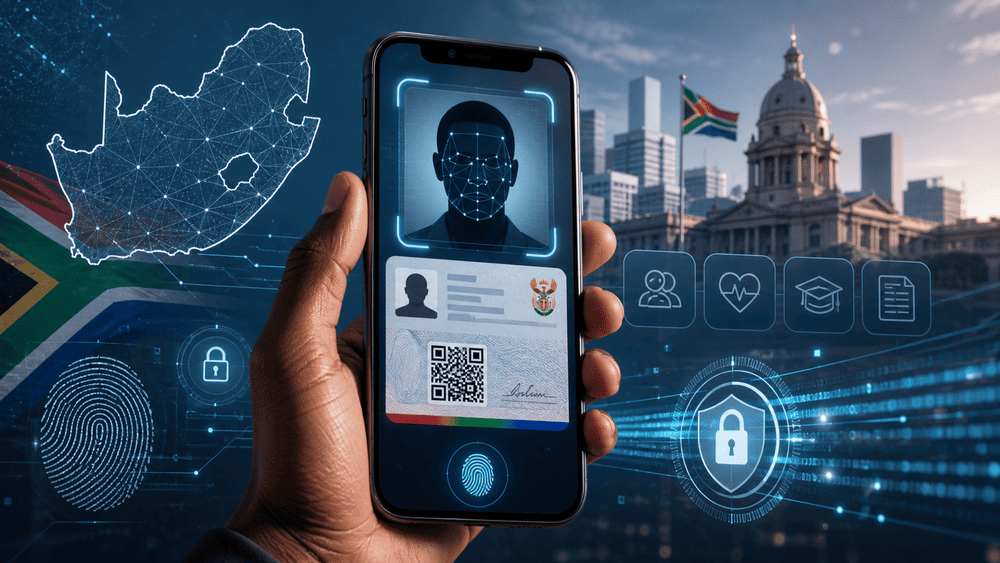
The South African government is officially moving forward with a proposal for a national Digital ID system, with the Department of Home Affairs (DHA) having gazetted draft amended regulations for public comment until early June 2026. This initiative, a central pillar of President Ramaphosa’s strategy to modernize public services, positions digital identity as foundational infrastructure modeled after global benchmarks in Estonia, Singapore, and the European Union. The optional electronic credential will coexist with physical Smart ID cards and be accessible via the MyMzansi mobile application, utilizing advanced biometric facial recognition for secure remote verification.
To obtain a digital ID under the proposed rules, South Africans aged 16 and older must apply in person at an “accredited enrolment point,” which includes DHA offices or partnered bank branches like Capitec, Standard Bank, ABSA, and Nedbank. Applicants will need to provide an existing proof of identity (such as a physical ID or birth certificate), a mobile number, an email address, and proof of residence. The enrollment process requires facial and fingerprint capture along with liveness detection to verify the user against the national population register. While enrollment at DHA branches will be free of charge, applications at private-sector sites will carry no additional cost beyond prescribed document fees.
For continued security, the digital ID will feature a five-year validity period. Holders will receive a notification via the MyMzansi app 90 days before expiry, at which point they can renew their credentials through a simple facial biometric check on their device. To further protect users, the system employs “device binding” to cryptographically link an identity to a specific smartphone, ensuring that stolen credentials cannot be accessed from unauthorized devices. Those attempting to use fraudulent documents or another person’s credentials could face fines or imprisonment.
The MyMzansi platform is designed to eventually serve as a single digital portal for all government interactions. Beyond the ID itself, the roadmap includes the digitization of driver’s licenses, matric certificates, and marriage certificates, as well as the ability to file police statements and test SASSA grant eligibility remotely. Minister Leon Schreiber has invited public submissions on these draft rules until June 6, 2026, as the department prepares for a full technical rollout before the end of the year.