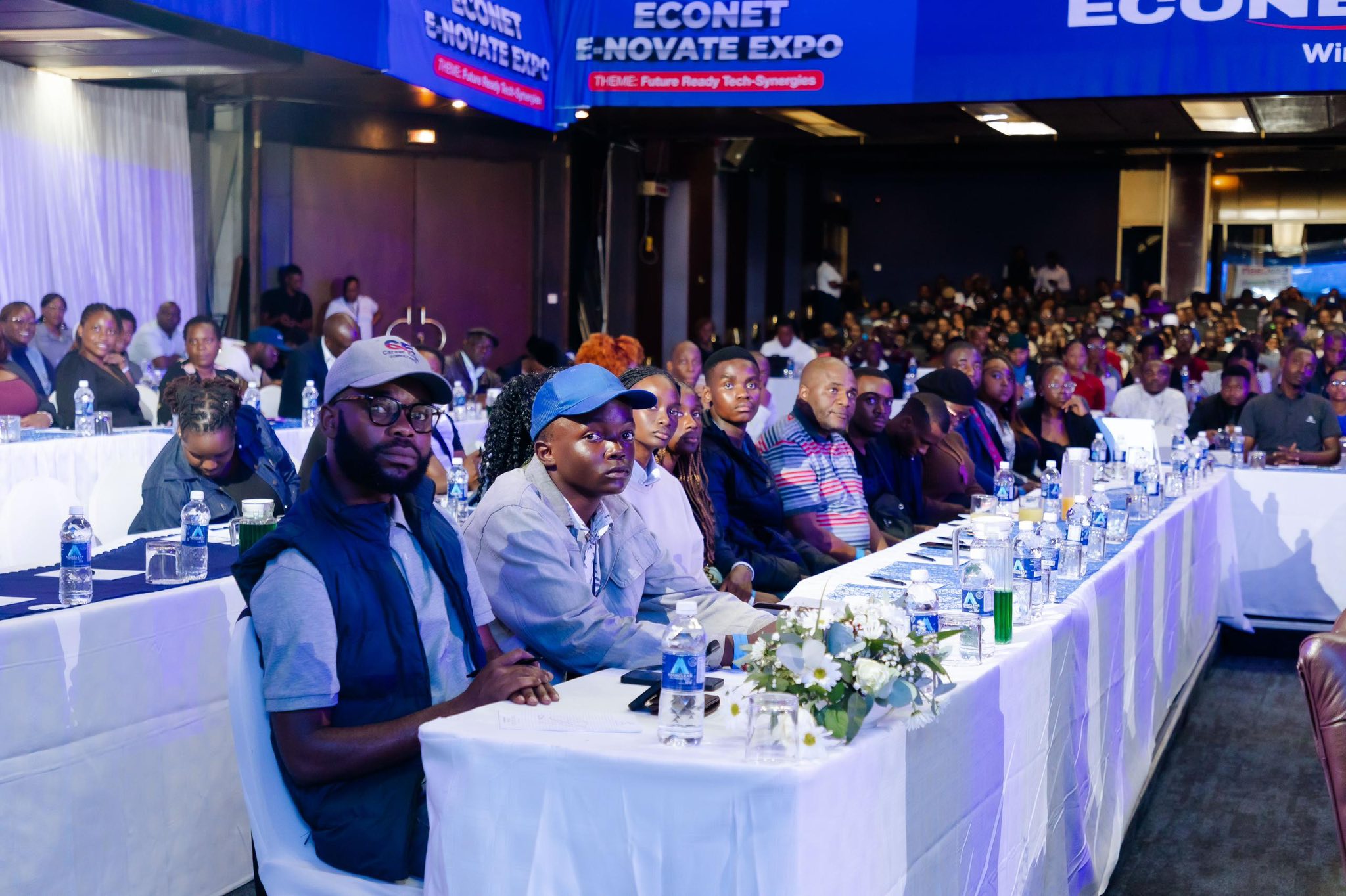
The E-Novate Expo brought together some of Zimbabwe’s most forward-looking thinkers to confront a question that will define the next decade: how will Artificial Intelligence reshape work and opportunity for young people in the country? The panel on The Role of Artificial Intelligence in Shaping Future Careers offered a rare, honest synthesis of perspectives from educators, technologists, organisational leaders and future-focused entrepreneurs.
Tofara Chokera opened the discussion with a sobering but necessary reflection. She highlighted the disturbing rise in NEET statistics and noted that many of the young people now classified as unemployed are not school dropouts but graduates. Zimbabwe continues to produce thousands of degree holders every year, yet industries no longer absorb talent at the same rate. She described this widening gap between credentials and opportunity as one of the most urgent labour-market challenges. But she also framed it as the threshold of a new pathway. Artificial Intelligence, she argued, is beginning to level the playing field for young Zimbabweans. With accessible upskilling resources, many of them free online, young people can now acquire marketable, future-proof competencies regardless of what they initially studied. In her words, AI is enabling youth to become globally competitive and unlocking doors that traditional qualifications alone can no longer guarantee.
The conversation shifted meaningfully when Tadzie Madzima emphasised the need to redefine what work means in an AI-driven era. She challenged the long-held belief that the only legitimate route to stability is through formal employment. Work today extends into entrepreneurship, freelancing, consulting, micro-enterprise and structured volunteering. Her contribution reminded the audience that as AI reshapes traditional employment, it is equally expanding the spectrum of economic participation. The future belongs not just to job seekers but to creators of opportunity.
Liberty Kazhanje added an important organisational perspective. He noted that companies have a responsibility to help their employees transition into an AI-enabled future. When organisations invest in training, exposure and guided experimentation, employees begin to view AI as a tool rather than a threat. Kazhanje argued that the most competitive companies will be those that support their workforce in adopting AI early and confidently. Workforce transformation, he said, cannot be achieved through pressure or panic. It requires psychological safety, structured learning pathways and leadership that understands the human dynamics of technological change.
During the session, Willard Muzaeni brought attention to the mechanics of hybrid work and the practical realities of AI adoption inside organisations. He emphasised that AI is not replacing people but rather the repetitive and mechanical components of their roles. In his view, the future belongs to workers who learn to treat AI as a co-pilot that handles routine tasks while humans focus on judgment, context, creativity, decision-making and relationship-building. Muzaeni also highlighted the growing importance of capability stacks. He noted that it is no longer sufficient to rely solely on a qualification, since AI is accelerating the pace at which traditional knowledge becomes outdated. The worker of the future, he argued, will blend AI fluency with deep domain expertise, communication proficiency, analytical thinking and the ability to break down complex problems. These layered capabilities are more resilient than any single degree, especially in a landscape where digital tools evolve weekly.
The discussion also acknowledged the realities of Zimbabwe’s dual labour market. A significant portion of the workforce operates informally, yet the informal economy is often excluded from high-level technology conversations. One of the panelists captured this truth clearly when they observed that if AI is designed only for corporates, Zimbabwe will miss the majority of the people who actually drive its economy. The session explored how micro-entrepreneurs, vendors, creatives and small retail operators can benefit from AI tools that support pricing, sourcing, bookkeeping, content creation and customer communication. For many, AI may become the productivity boost that moves them from survival to growth.
The panel closed with a shared sense of urgency. Zimbabwe is entering a decisive moment and must confront the implications of AI with intention rather than hesitation. The choices made now in education, corporate strategy, digital infrastructure and national policy will determine whether AI becomes a catalyst for inclusion or a driver of exclusion. What emerged at E-Novate was not fear but clarity. Young people must build capabilities rather than cling to outdated expectations. Businesses must redesign work rather than reduce headcount. Policymakers must accelerate transformation rather than react to it. And the country must recognise that AI is no longer a distant horizon. It is already here.
TechBytes Africa will continue to examine these discussions and unpack what they mean for Zimbabwe’s long-term readiness, competitiveness and participation in the global innovation economy.