The Mutapa Investment Fund is being offered one United States dollar for its stake in Telecel Zimbabwe. Empowerment Corporation is being offered fifty cents.
Those two numbers, set out in the corporate rescue plan, tell you most of what you need to know about the condition of the country’s third mobile operator, and they are the most quoted detail of the rescue plan. They are also the least important. The interesting part of this transaction is how the acquiring vehicle intends to pay for a network it is buying for almost nothing.
The shape of the deal
Augustus Capital is a special purpose investment vehicle formed specifically to participate in Telecel’s restructuring and proposed acquisition through the corporate rescue proceedings. The headline consideration is US$175 million.
Telecel was placed under voluntary corporate rescue on 27 October 2025 following a board resolution. The process is run by corporate rescue practitioners Kundai Tibugare and Bulisa Mbano of Grant Thornton Zimbabwe, and a meeting of members and creditors to vote on the plan was convened for 24 July under the Insolvency Act. The process began with an open invitation to investors earlier this year, with expressions of interest due to Grant Thornton by 28 April. Adoption requires dual majority voting across creditors and shareholders, plus multiple regulatory approvals, so the deal is not done.
The financing stack, as reported: a capital financing facility of up to US$127 million from Ecobank, available once creditors formally adopt the plan, funding both the transaction and ongoing operations. Alongside it, agreements with the Chinese equipment manufacturer ZTE and with Satewave Technologies covering network equipment valued at US$60.5 million and rollout services worth US$28.5 million.
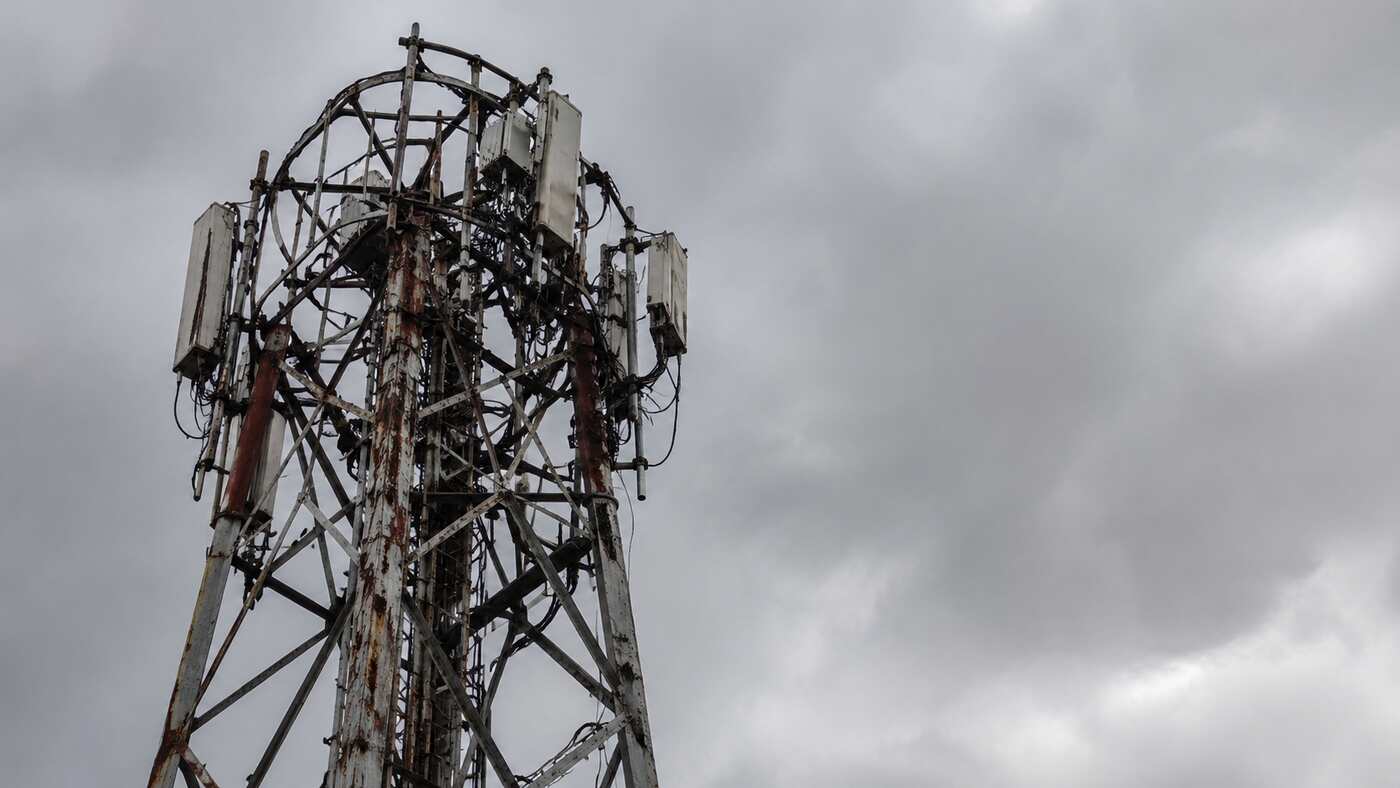
The network plan: capital expenditure of US$89 million, anchored on a large scale 4G and LTE deployment across roughly 1,200 sites, aimed at expanding coverage, winning subscribers and raising average revenue per user.
The people: all 248 employees retained, with US$1 million set aside against unforeseen retrenchment costs, and any new hires recruited on what the plan calls sustainable contracts following interviews by Augustus Capital.
The projections: a loss of US$4.4 million in year one, then profits of US$5.4 million, US$7.6 million, US$14.8 million and US$24.3 million through year five, with a return to profitability inside 24 months.
What creditors and shareholders actually get
Telecel is reported to owe creditors more than US$240 million, which makes this one of the largest corporate restructurings the Zimbabwean telecoms sector has seen.
The regulator’s recovery is estimated at around 61 cents in the dollar, materially better than the expected return under liquidation, which is the argument the practitioners are making to get the plan adopted.
Shareholder related loans of US$97.7 million are to be compromised at seven US cents in the dollar. Because the Mutapa Investment Fund was the only shareholder participating in those loans, that produces a cash settlement of about US$6.8 million to the sovereign wealth fund on a net dividend basis. Existing shareholders also collectively retain a 15% equity stake in the restructured company.
So the nominal one dollar and fifty cents are not the whole consideration to shareholders. They are the price of the equity, with the real value flowing through the loan compromise and the retained minority stake.
A discrepancy worth resolving
Reporting on the shareholding is inconsistent, and anyone writing about this deal should be careful.
The long established structure, confirmed across multiple accounts of Telecel’s history, is that the state holds 60% through ZARNet under the Mutapa Investment Fund, having bought it from Telecel International, with Empowerment Corporation holding 40%. That 60/40 split dates to the original 1997 licence, which gave Empowerment Corporation 40% against the foreign partner’s 60%. The rescue plan documents reported by several outlets are consistent with that, offering Mutapa US$1 against its 60% and Empowerment Corporation US$0.50 against its 40%.
One account of the transaction instead describes Mutapa reducing its shareholding from 45% to 15% and ceding 30% to Augustus Capital. That does not sit with the 60/40 split reported everywhere else, and the 15% figure appears elsewhere as the residual stake retained collectively by existing shareholders after restructuring rather than by Mutapa alone.
The likeliest reading is that existing shareholders together keep 15% and Augustus takes the balance. We are not treating the 45% figure as established, and neither should anyone else until the plan itself is public.
Why the operational question is harder than the financial one
The capital is being assembled competently. Whether capital is the binding constraint is a separate question, and it has been raised elsewhere in the Zimbabwean press.
Telecel’s active subscriptions collapsed to 303,284 by the end of 2025, from a peak above 1.6 million, leaving market share around or below one per cent. That is not a business that lost a price war. It is a business that stopped being usable, because coverage and capacity degraded to the point where customers left and stopped considering it.
Winning them back is not the same problem as building sites. It requires a subscriber to switch away from a network that works, on the strength of a network that has not worked for a decade, in a market where the incumbent has roughly 8.35 million subscribers and an entrenched mobile money business that functions as a switching cost in its own right. We have written before about how hard that mobile money moat is to cross, even for a well capitalised challenger.
The plan’s own projections assume higher average revenue per user, which means Telecel must attract customers who spend, not merely customers who register. Those are the hardest customers in the market to move.
There is also the question the deal does not answer. The reported structure references partnering with a major regional telecommunications operator, and Zimbabwe’s history on foreign telecoms ownership is not encouraging: the state has consistently sought capital partners rather than transfers of control, and Telecel’s original licence conditions on foreign shareholding produced years of dispute. If operational capability has to come from outside while control stays inside, that tension has to be resolved somewhere in the documents.
What to watch
Whether creditors adopt the plan, and on what majorities.
Whether the Ecobank facility draws down, since the financing is conditional on adoption and a facility is not the same as money spent.
Whether the 1,200 sites appear on a published schedule with dates, because LTE rollout promises in this market have a poor record and site counts are checkable.
Whether POTRAZ’s quarterly sector reports show Telecel’s active subscriber line turning upward. Fixed wireless and satellite alternatives are also now part of the competitive picture, as our guide to Starlink in Zimbabwe sets out. That single number, published quarterly by the regulator, is the only independent scoreboard this turnaround has.
And whether the identity of the regional operator partner is disclosed. Right now the most consequential fact about Telecel’s future is the one nobody has named.
Related reading
- Starlink in Zimbabwe: a complete guide
- POTRAZ starts inspecting on 1 September. Here is exactly what it will ask for.