
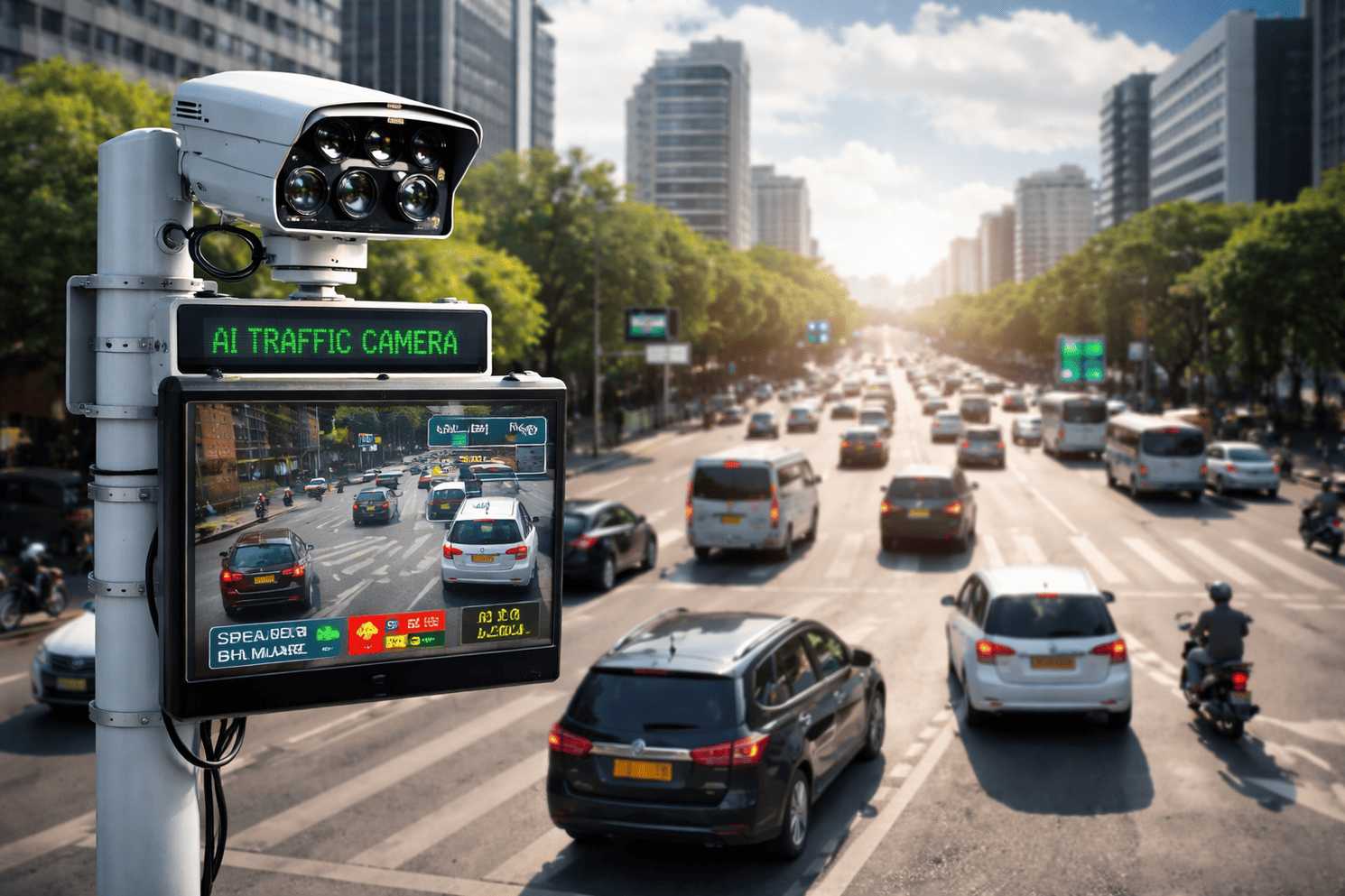
Zimbabwe is preparing to roll out artificial intelligence powered traffic cameras across Harare, marking one of the country’s most significant steps toward automated road law enforcement.
Authorities confirmed that the first phase will see smart cameras installed at 20 locations, focusing on high risk intersections and major traffic corridors. The deployment is expected to go live before mid March 2026 as part of broader efforts to improve road safety and modernise traffic management.
Moving Toward Automated Enforcement
The new system will rely on AI enabled cameras capable of monitoring traffic in real time. Using image recognition technology, the cameras will automatically detect violations such as speeding, running red lights, illegal turns, and driving against traffic flow.
Once an offence is detected, the system will capture number plate details and generate a digital record of the violation. Authorities say this approach is designed to improve consistency in enforcement while reducing reliance on manual policing.
Speed detection units will also be deployed in accident prone zones, using radar or laser technology to identify vehicles exceeding speed limits.
Digital Ticketing and Fine Payments
A key component of the rollout will be a fully digital ticketing platform. Violations will trigger automated electronic tickets linked to vehicle registration data.
Drivers will receive notifications through digital channels and mobile applications, allowing them to view offences and pay fines electronically. Officials say the system is intended to streamline enforcement processes and reduce disputes linked to manual ticketing.
How Zimbabwe Compares Across Africa
Zimbabwe is not alone in adopting AI based traffic enforcement. Several African cities have already introduced similar technologies as part of smart city and road safety initiatives.
Nairobi operates AI enabled cameras capable of detecting speeding and red light violations in real time. Kigali uses automated traffic monitoring integrated into its broader digital government systems. South African cities have deployed advanced traffic cameras for years, including systems that can detect distracted driving and seatbelt violations.
These examples show that the technology itself is no longer new. What differentiates deployments is how effectively they integrate with enforcement systems, vehicle databases, and legal frameworks.
Lessons From Other Deployments
Experience across Africa suggests that installing cameras is only one part of the equation. The effectiveness of such systems depends largely on operational and institutional factors.
Successful implementations typically require strong integration with vehicle licensing databases, reliable digital fine collection mechanisms, and legal frameworks that recognise automated evidence.
In some countries, challenges have emerged around public acceptance, data privacy concerns, and enforcement gaps when offenders fail to pay fines. These issues often determine whether systems achieve their intended impact.
Part of a Wider Smart Traffic Strategy
Authorities say the Harare rollout forms part of a broader national strategy to modernise traffic management using digital technologies.
Following the initial phase in the capital, similar systems are expected to be extended to other urban centres, including Bulawayo, before expanding nationwide.
The initiative comes amid rising concerns over road accidents, congestion, and traffic violations in urban areas.
Why It Matters
Globally, automated traffic enforcement systems have been shown to improve compliance with road regulations by increasing the likelihood that violations will be detected.
For Zimbabwe, the success of the rollout will depend not only on the technology itself but also on how well the system integrates with existing traffic enforcement processes, digital payment platforms, and regulatory frameworks.
As the country moves toward greater use of AI in public infrastructure, the traffic camera deployment represents a visible test of how digital technologies can be applied to improve public safety outcomes.